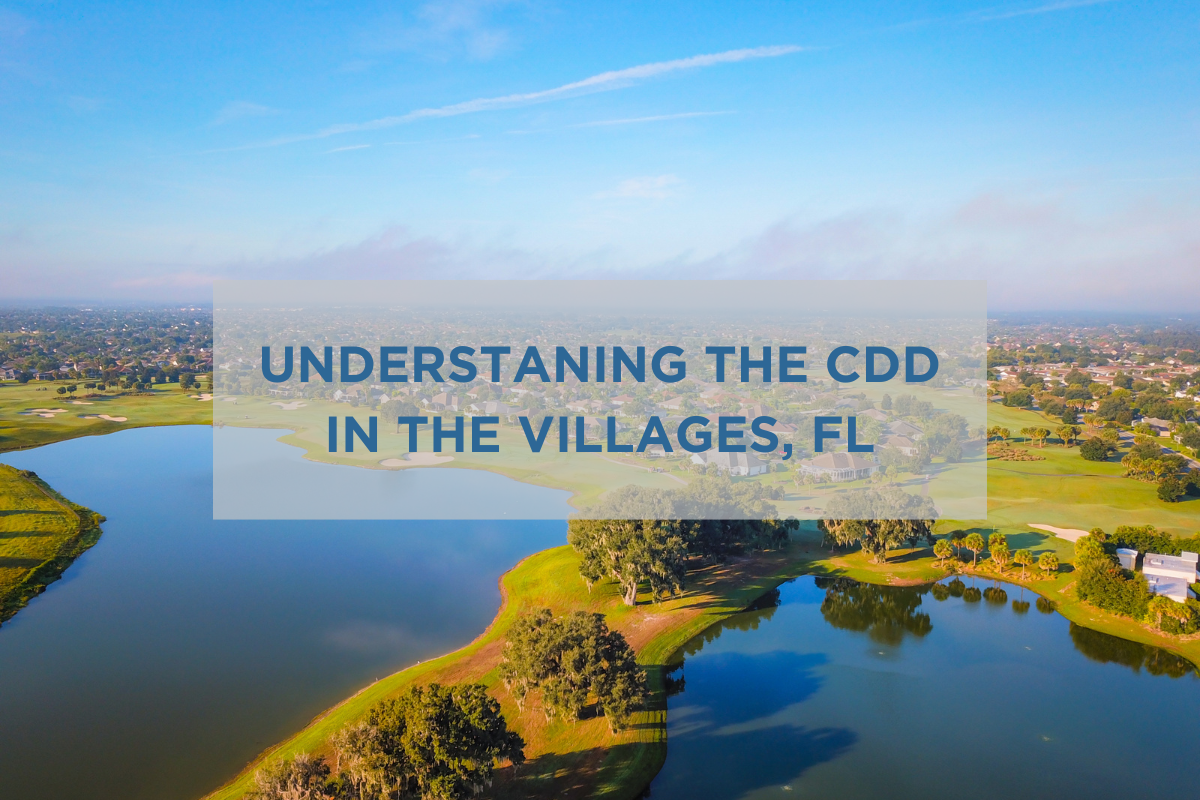

The Villages, Florida: A Premier 55+ CommunityWelcome to The Villages, Florida, a distinguished 55+ community located in the heart of central Florida. Everything you need to live life to its fullest
Dated: February 26 2024
Views: 1624
A community development district (CDD) is a special purpose governmental entity created by the state or local government to provide community infrastructure and services to a specific area. CDDs are typically created to finance, construct, operate, and maintain infrastructure and community facilities, such as roads, water and sewer systems, drainage systems, parks, recreational facilities, and public buildings. They are commonly used in residential and commercial developments, especially in areas that are rapidly growing and expanding.
CDDs are created through a process that involves several steps. The first step is the creation of a development plan by the developer or landowner, which outlines the proposed infrastructure and facilities to be provided to the community. The plan must be approved by the local government, which then creates the CDD by adopting an ordinance or resolution that establishes the district's boundaries, powers, and financing mechanisms.
Once the CDD is established, it can issue bonds or other debt instruments to finance the construction of infrastructure and facilities. The bonds are repaid through special assessments on the properties within the district, which are typically levied annually as part of the property tax bill. The assessments are based on the cost of providing the infrastructure and facilities and are proportional to the benefits received by each property.
The CDD is governed by a board of supervisors, which is elected by the property owners within the district. The board is responsible for overseeing the construction, operation, and maintenance of the infrastructure and facilities, as well as the collection and management of the special assessments. The board also has the authority to levy additional assessments or fees to cover unexpected costs or to fund additional projects.
One of the key advantages of CDDs is that they provide a reliable and stable source of funding for the construction and maintenance of community infrastructure and facilities. This allows developers and landowners to finance the costs of development without relying on traditional sources of financing, such as banks or private investors. CDDs also provide a mechanism for ensuring that the costs of infrastructure and facilities are shared equitably among all property owners, based on the benefits received.
In summary, a community development district is a special purpose governmental entity that provides community infrastructure and services to a specific area. It is created through a process that involves the local government and property owners within the district, and it is funded through special assessments on the properties within the district. CDDs are commonly used in residential and commercial developments and provide a reliable and equitable source of funding for community infrastructure and facilities.
The Villages, Florida: A Premier 55+ CommunityWelcome to The Villages, Florida, a distinguished 55+ community located in the heart of central Florida. Everything you need to live life to its fullest
Bonds and Community Development Districts (CDDs) in The VillagesIf you're considering purchasing a home in The Villages, Florida, it's crucial to understand what a Community Development District )
Bond PayoffsIf you're considering moving to The Villages Retirement Community, or you’re already a resident, you may have heard about the concept of “paying off the bond.”
Living in The Villages and Central Florida offers a tourist type lifestyle, with great retirement communities, family communities, entertainment and family fun, but it's essential to be prepared for
 Copyright © MFRMLS.com All information deemed reliable but not guaranteed. All properties are subject to prior sale, change or withdrawal. Neither listing broker(s) or information provider(s) shall be responsible for any typographical errors, misinformation, misprints and shall be held totally harmless. Listing(s) information is provided for consumers personal, non-commercial use and may not be used for any purpose other than to identify prospective properties consumers may be interested in purchasing. Information on this site was last updated Last updated on September 20, 2026 1:43 PM UTC The listing information on this page last changed on Last updated on September 20, 2026 1:43 PM UTCd. The data relating to real estate for sale on this website comes in part from the Internet Data Exchange program of MFR MLS.
All information deemed reliable but not guaranteed. All properties are subject to prior sale, change or withdrawal. Neither listing broker(s) or information provider(s) shall be responsible for any typographical errors, misinformation, misprints and shall be held totally harmless. Listing(s) information is provided for consumers personal, non-commercial use and may not be used for any purpose other than to identify prospective properties consumers may be interested in purchasing.
Updated on September 20, 2026 1:43 PM UTC
Copyright © MFRMLS.com All information deemed reliable but not guaranteed. All properties are subject to prior sale, change or withdrawal. Neither listing broker(s) or information provider(s) shall be responsible for any typographical errors, misinformation, misprints and shall be held totally harmless. Listing(s) information is provided for consumers personal, non-commercial use and may not be used for any purpose other than to identify prospective properties consumers may be interested in purchasing. Information on this site was last updated Last updated on September 20, 2026 1:43 PM UTC The listing information on this page last changed on Last updated on September 20, 2026 1:43 PM UTCd. The data relating to real estate for sale on this website comes in part from the Internet Data Exchange program of MFR MLS.
All information deemed reliable but not guaranteed. All properties are subject to prior sale, change or withdrawal. Neither listing broker(s) or information provider(s) shall be responsible for any typographical errors, misinformation, misprints and shall be held totally harmless. Listing(s) information is provided for consumers personal, non-commercial use and may not be used for any purpose other than to identify prospective properties consumers may be interested in purchasing.
Updated on September 20, 2026 1:43 PM UTC
33. Required DMCA Notice
The Digital Millennium Copyright Act of 1998, 17 U.S.C. §512, the DMCA, provides recourse for copyright owners who believe that material appearing on the Internet infringes their rights under U.S. copyright law. If you believe in good faith that any content or material made available in connection with our website or services infringes your copyright, you (or your agent) may send us a notice requesting that the content or material be removed, or access to it blocked. Notices must be sent in writing by email to DMCAnotice@MLSGrid.com. The DMCA requires that your notice of alleged copyright infringement include the following information: (1) description of the copyrighted work that is the subject of claimed infringement; (2) description of the alleged infringing content and information sufficient to permit us to locate the content; (3) contact information for you, including your address, telephone number and email address; (4) a statement by you that you have a good faith belief that the content in the manner complained of is not authorized by the copyright owner, or its agent, or by the operation of any law; (5) a statement by you, signed under penalty of perjury, that the information in the notification is accurate and that you have the authority to enforce the copyrights that are claimed to be infringed; and (6) a physical or electronic signature of the copyright owner or a person authorized to act on the copyright owners behalf. Failure to include all of the above information may result in the delay of the processing of your complaint.
